What Cold Can Change in Sore Tissue
The first few minutes after a bump or an overworked muscle can be surprisingly noisy: throbbing, warmth, and a sense that the area is getting bigger. A cold compress may quiet some of that early discomfort by making the area feel less sensitive and helping limit the swelling that can follow a minor injury. It does not fix the underlying strain or bruise, but it can make movement and rest feel more manageable.
Relief can be misleading, though. As skin cools, numbness may hide the point where the cold has become too intense. If the area starts to burn, sting, ache sharply, or look unusually pale, blotchy, or blue-gray, the compress has stopped being comforting. Cold is most useful as a brief, protected pause—not as something to leave in place until the area feels completely numb.
Choose a Simple Barrier Before Applying Ice
A thin towel can seem like an unnecessary extra layer when the area is already aching, especially if the cold feels good at first. Yet that small barrier matters because skin cools faster than the deeper sore tissue people are trying to soothe. A folded washcloth, light dish towel, or fabric cover around a gel pack helps spread the cold more evenly and reduces the chance of a harsh, concentrated patch against the skin.
The barrier does not need to be thick enough to block the cooling entirely. It should simply keep ice, a frozen pack, or a bag of frozen food from resting directly on bare skin. If moisture soaks through, the cold can feel more intense than expected, so replacing a damp cloth may be worthwhile. It is also easy to lose track of time once numbness sets in; burning, stinging, increasing pain, or pale and blotchy skin are reasons to remove the compress rather than adding another layer of cold.
Build a Compress That Fits the Body Area

A bag of ice cubes may work well over a broad, flat area like the front of a thigh, then feel awkward and overly intense on an ankle, wrist, or the side of a knee. The compress should rest against the sore spot without needing to be pressed down hard. A flexible gel pack or a sealed bag with a small amount of ice and water can mold around a joint more gently than a stiff frozen block. For a smaller area, a folded cold washcloth may be easier to control.
Too much weight can become its own source of discomfort, particularly over a tender bruise or bony area. The goal is even contact, not firm pressure or complete coverage of the limb. If the pack keeps sliding, wrapping it loosely with a dry cloth can help, but it should not be secured tightly enough to leave marks, cause tingling, or make the area feel more numb. An ill-fitting compress can turn a short period of relief into a distracting, uncomfortable task.
Short Sessions Usually Work Better Than Prolonged Cold
It is easy to leave a cold pack on longer once the throbbing begins to fade. The area may feel calm and pleasantly numb, while the skin is still becoming colder than it needs to be. For a minor bump, sore muscle, or early puffiness, a session of about 15 to 20 minutes is commonly enough to provide a break in discomfort without turning cold exposure into another problem.
After removing the compress, let the skin warm back toward its usual temperature before using cold again. A pause of at least 30 minutes gives you a chance to notice what the area actually feels and looks like. If it remains pale, blotchy, unusually firm, stinging, or more painful as it warms, skip the next round rather than trying to “ice through” the sensation. The useful part is the short reset, not keeping the area numb for as long as possible.
Match Cold Therapy to the Problem at Hand
Sometimes the question is not whether cold feels good, but whether it fits what is happening. A fresh bump that is starting to puff up, a minor bruise that feels warm and tender, or a muscle that is sore after unusual activity may respond well to a brief cold session. In those situations, the cooling can take the edge off throbbing and make the area feel less reactive for a while.
That does not mean every ache needs ice. A stiff muscle that feels tight rather than hot or swollen may not change much with cold, and the chill can make some people feel more guarded or uncomfortable. Cold also cannot explain away pain that keeps worsening, spreads, or makes normal use of a joint difficult. If a protected, short session leaves the area feeling calmer without burning, excessive numbness, or strange skin color, it may be a useful comfort measure. If it adds discomfort or does little, there is no benefit in repeating it simply because cold is the usual response.
Why Direct Ice Can Turn Relief Into Irritation
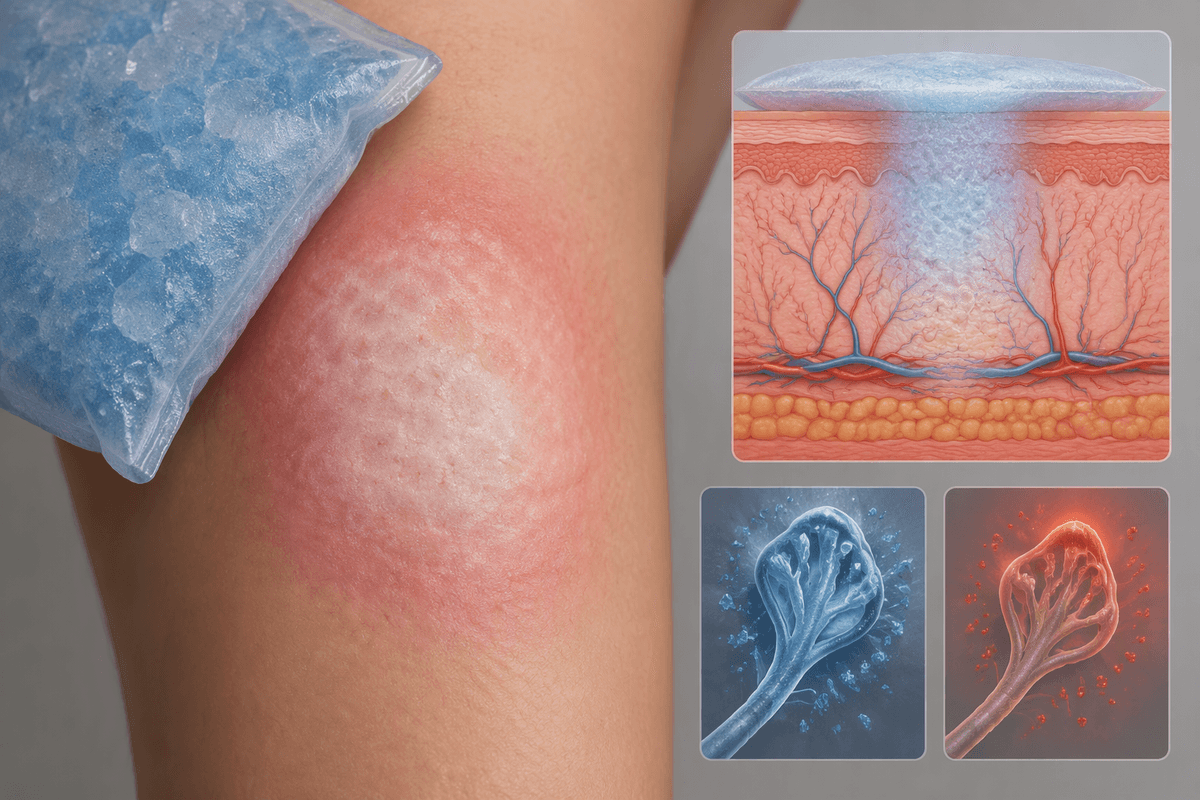
The direct ice does not always feel harsh right away. At first, it may seem more effective because the cold reaches the skin quickly. Then numbness dulls the warning signals that would normally make someone pull the pack away. A cube, frozen gel pack, or bag of frozen food pressed against bare skin can create one intensely cold spot rather than the gentler, spread-out cooling a cloth barrier provides.
As the skin becomes overly cold, it may sting, burn, turn pale or blotchy, or feel strangely hard. These changes can be easy to miss if attention is focused on the original sore area instead. Reapplying ice immediately after a long session can add to the irritation, even when each round seems brief on its own. The aim is not to make the skin completely numb. A covered compress that feels cool but tolerable is usually enough to provide short-term relief without making the surface of the skin another source of discomfort.
Know When a Compress Is Not Enough
A compress can be reassuring when a sore spot is tender but still manageable, which can make it tempting to keep treating a more serious change the same way. The limit becomes clearer when pain is severe, keeps increasing, or makes it hard to bear weight, move a joint, use a hand normally, or sleep. A limb that looks misshapen, rapidly swells, feels weak or persistently numb, or has skin that becomes cold, blue, or unusually pale needs more attention than another round of ice.
It is also worth stepping back when a bump involves the head, eye, chest, or abdomen, or when symptoms such as confusion, repeated vomiting, trouble breathing, dizziness, or worsening headache appear afterward. Cold may still offer brief comfort while help is being arranged, but it should not delay care. The same caution applies when redness, warmth, swelling, or pain continues to spread rather than settle over time. A compress can soften discomfort; it cannot reliably show what is happening underneath.