Setting expectations: South Africa safari realities
The first reality check hits fast: a “safari day” is mostly waiting, scanning, and driving—often in silence—followed by five seconds of adrenaline when something finally moves. That’s not a flaw; it’s the format. If you’re expecting constant National Geographic action, Kruger (and South Africa in general) can feel oddly ordinary between sightings, especially midday when animals tuck into shade and the light turns harsh.
Timing and fatigue matter more than people admit. Gates open early and close early, and the best wildlife hours are usually the same hours you’d prefer a slow breakfast. Self-driving adds another layer: you’ll be making dozens of small decisions—where to turn, when to abandon a “maybe” track, whether to chase a radio-reported leopard that could already be gone. It works brilliantly when you’re patient and like control; it’s frustrating when you want certainty and a guide doing the work.
Also: rules are real. Speed limits, staying in the vehicle, restricted roads, and the simple fact that animals don’t care about your itinerary all shape what you actually see. Plan for variability, not perfection—then a good day feels like a win, and a quiet one doesn’t derail the trip.
Choose your region: Kruger, KZN, Cape reserves
The first big decision usually shows up on a map: do you want the “classic” safari density of Kruger, the quieter rhythm of KZN, or the convenience of a Cape reserve that fits neatly around wine country? They’re all valid—but they don’t feel the same on the ground, and your tolerance for driving is the deciding factor more often than your animal wish list.
Kruger is the high-likelihood bet for first-timers because the road network is extensive and you can stack multiple game drives across several days without changing beds. The trade-off is scale: distances are real, sightings can be spread out, and if you pick the wrong base camp you can burn prime morning light just repositioning. KZN (think Hluhluwe–iMfolozi and surrounds) can be calmer and more compact, which helps when you’re short on time or don’t love long, focused drives—though it may feel less “big” in that iconic, endless-safari way.
Cape reserves are the easiest add-on if your trip is already anchored in Cape Town, but the convenience comes with constraints: they’re smaller, often pricier per night for what you get, and you’re working within one fenced system. If your total trip is 7–10 days, I’d rather see you commit 3–4 nights in one primary safari region than split across two and spend your best wildlife hours in transit.
Pick your style: self-drive vs guided lodges
The decision usually gets real the first time you price it out: self-drive Kruger can look like a bargain until you add up fuel, longer stays to “earn” sightings, and the mental load of being your own guide at 5:30 a.m. You can linger at a waterhole, bail on a crowded sighting, or change plans without asking anyone. The downside is you’ll miss things you didn’t know to look for, and you’ll feel every slow hour more sharply when you’re the one driving.
Guided lodges (especially in private reserves bordering Kruger) flip that equation. You’re paying for access, tracking skill, and efficiency: off-road driving, radio coordination, and a guide who can turn vague bush signs into an actual leopard. What doesn’t work for everyone is the fixed rhythm—set drive times, shared vehicles, and less freedom to opt out when you’re tired or the group wants “one more” loop.
If you’re split, a practical middle path is 2–3 nights self-drive in Kruger, then 2 nights at a lodge to sharpen the odds—and your patience.
Best timing: seasons, sightings, crowds, prices
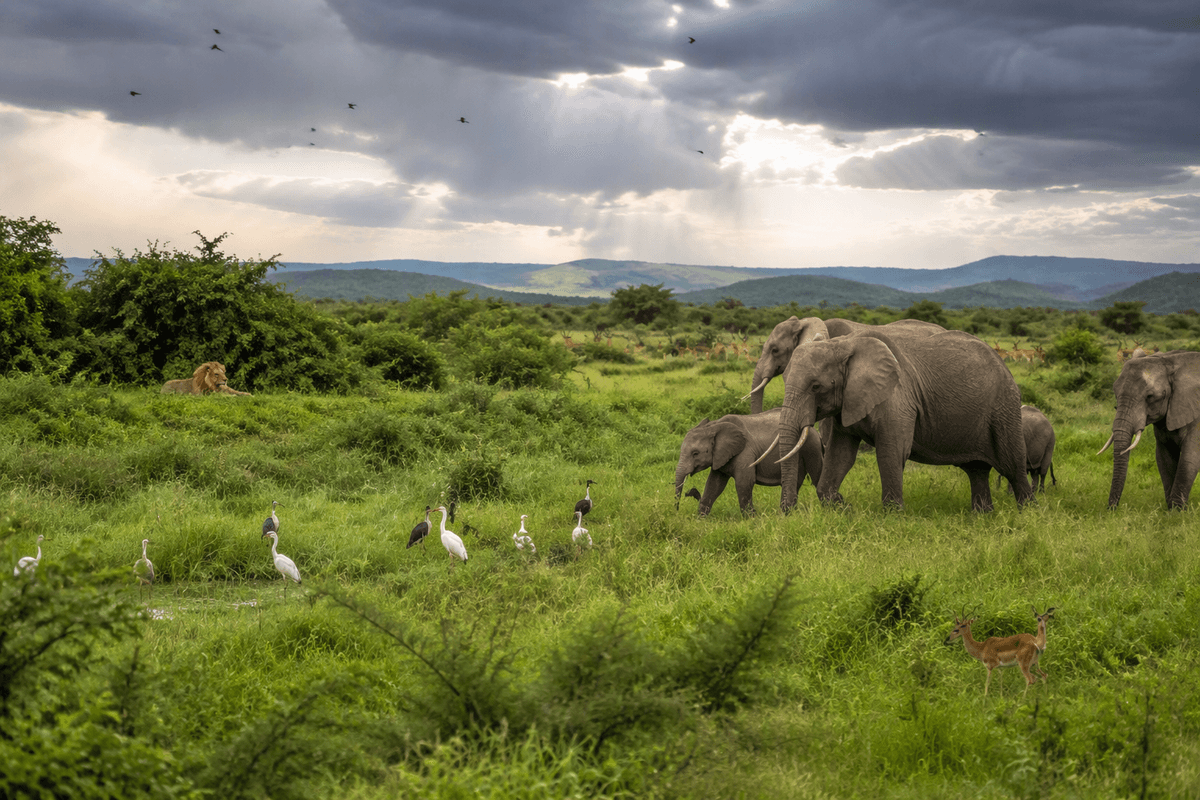
The first timing decision usually looks like a weather question, but it’s really a visibility-and-price question. In the dry winter months (roughly May–September), grass is low and animals concentrate around water, which makes self-driving feel more “productive” per hour—but it’s also peak season, so popular sightings stack up with cars fast and mid-range camps/lodges book out earlier.
Summer (roughly November–March) can be greener, hotter, and stormier—better for birds and baby animals, sometimes harder for big-cat spotting because there’s more cover. You’ll often pay less and deal with fewer crowds, which matters if you’re the kind of traveler who gets irritated by a ten-vehicle traffic jam at a lion. If you’re choosing one “sweet spot,” shoulder periods (April or October) can balance costs and conditions—just accept you’re trading certainty for sanity.
Budget and booking: permits, parks, packages
The budget question usually turns into a booking panic the moment you realize Kruger isn’t one “hotel”—it’s a patchwork of rest camps, small camps, and private concessions, each with different availability. What works well is locking in beds first (especially for winter and school-holiday weeks), then building drives around that. What doesn’t: trying to “optimize” your route before you know where you can actually sleep.
For self-drive, think in layers: conservation/daily entry fees, accommodation, fuel, and the add-ons that quietly improve your odds—sunrise/sunset drives, a guided walk, even one night with better placement near a river road. Those activities cost extra, but they can rescue a trip when you’re short on time or patience. Lodges feel expensive until you price the package properly: meals, two daily drives, and tracking access are often bundled, while transfers and premium drinks can be the surprise line items.
Safari-ready essentials: gear, health, safety
The first time you pack for a safari, it’s tempting to treat it like an outdoor expedition. You don’t need that—what you need is to be comfortable sitting still, then suddenly cold, then suddenly dusty. Layers beat bulk: a warm top for pre-dawn drives, a lighter layer for late morning, and something that can handle wind in an open vehicle. Binoculars are the one “gear” item that genuinely changes what you see (especially on self-drive), while a long zoom camera is optional unless photography is the point.
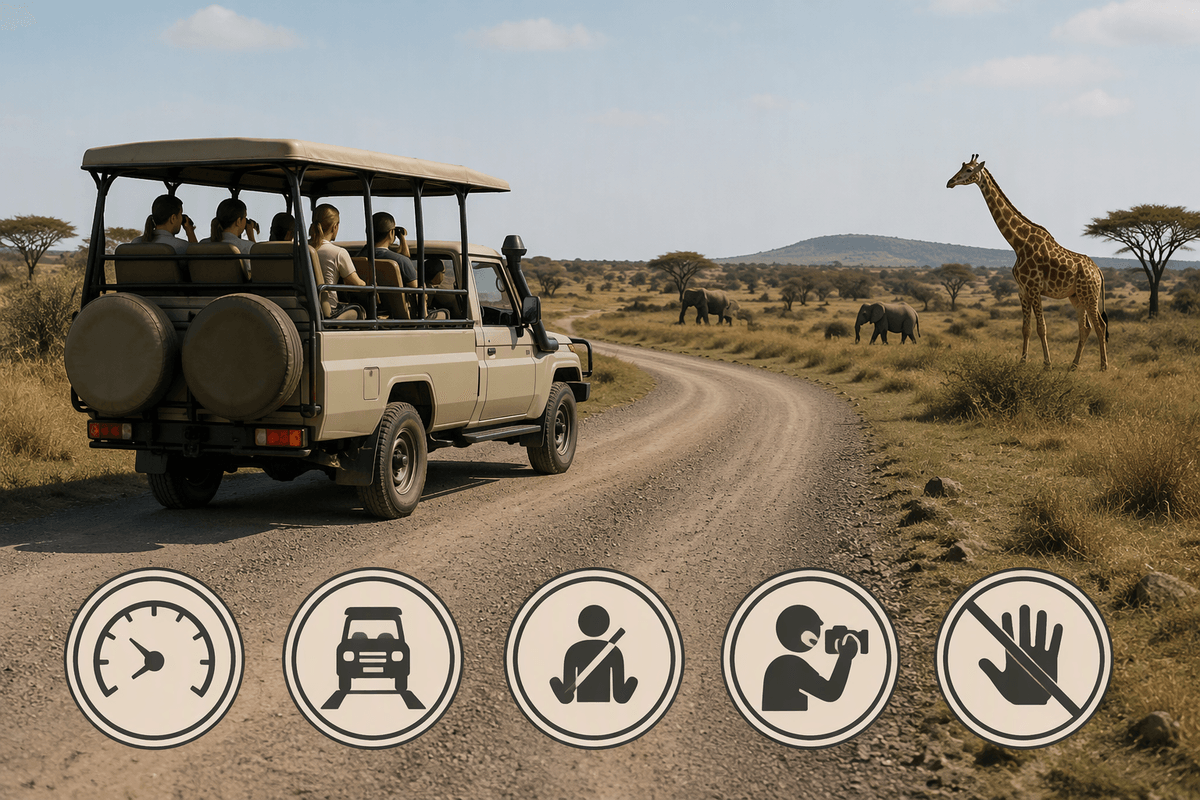
Health and safety are mostly about reducing friction. Sun and dehydration sneak up fast, even in winter—carry water in the car and reapply sunscreen when you stop, not when you remember. For malaria, your risk depends on where and when you go; don’t guess—check your exact area and season with a travel clinic and plan meds early if recommended. In the park, the rules aren’t vibes: don’t get out at “quiet” pull-offs, don’t push speed limits to chase sightings, and don’t assume your rental insurance loves gravel roads. The goal is simple: fewer avoidable mistakes, more bandwidth for the patient part that actually produces animals.
Leave prepared: ethical viewing and lasting memories
The last morning is usually when people try to “force” the checklist—one more loop, one more river road—right as fatigue and gate times catch up. If you’re self-driving, the ethical choice often looks like a practical one: don’t crowd a sighting, don’t edge forward because everyone else is, and don’t block the road just to hold a position. You’ll see more (and stress less) by letting the animal set the tempo, then moving on when the scene stalls.
What works surprisingly well is building a small ritual that isn’t animal-dependent: a note in your phone after each drive (where you were, what light you had, what did and didn’t work), and one “no-driving” break to let the trip land. You’ll skip a few possible sightings—but you’ll remember the ones you did get with more clarity, not just as a blur of dust, maps, and urgency.
If you’re leaving with one takeaway, make it this: a “good” safari isn’t the maximum number of animals—it’s the number of calm, unhurried moments you made room for.