Why falls at home often feel surprising
The moment it happens, it rarely feels dramatic. It may be a quick toe-catch on a doorway lip, a slight skid on the kitchen floor, or that odd “why did my foot do that?” feeling when you turn too fast. Because it’s your own home—familiar, predictable—your brain expects safety, so the surprise can feel bigger than the stumble itself.
What’s often changing is smaller and slower: a little less lift in the feet, a longer pause before the body corrects, a bit more sway when you look down or pivot. Those shifts can be almost invisible on a good day. Then one rushed moment—answering the phone, carrying laundry, hurrying to the bathroom—stacks timing, weight shift, and distraction together, and the near-miss suddenly makes sense.
One night the hallway feels fine; another night, in the same spot, you hesitate. It may not be “bad luck” so much as a mix of lighting, fatigue, footwear, and how much your hands are doing. When you start noticing that pattern, the surprise tends to soften into a clearer “oh, it’s usually right here, and usually when I’m doing this.”
Spotting hidden trip patterns in everyday rooms
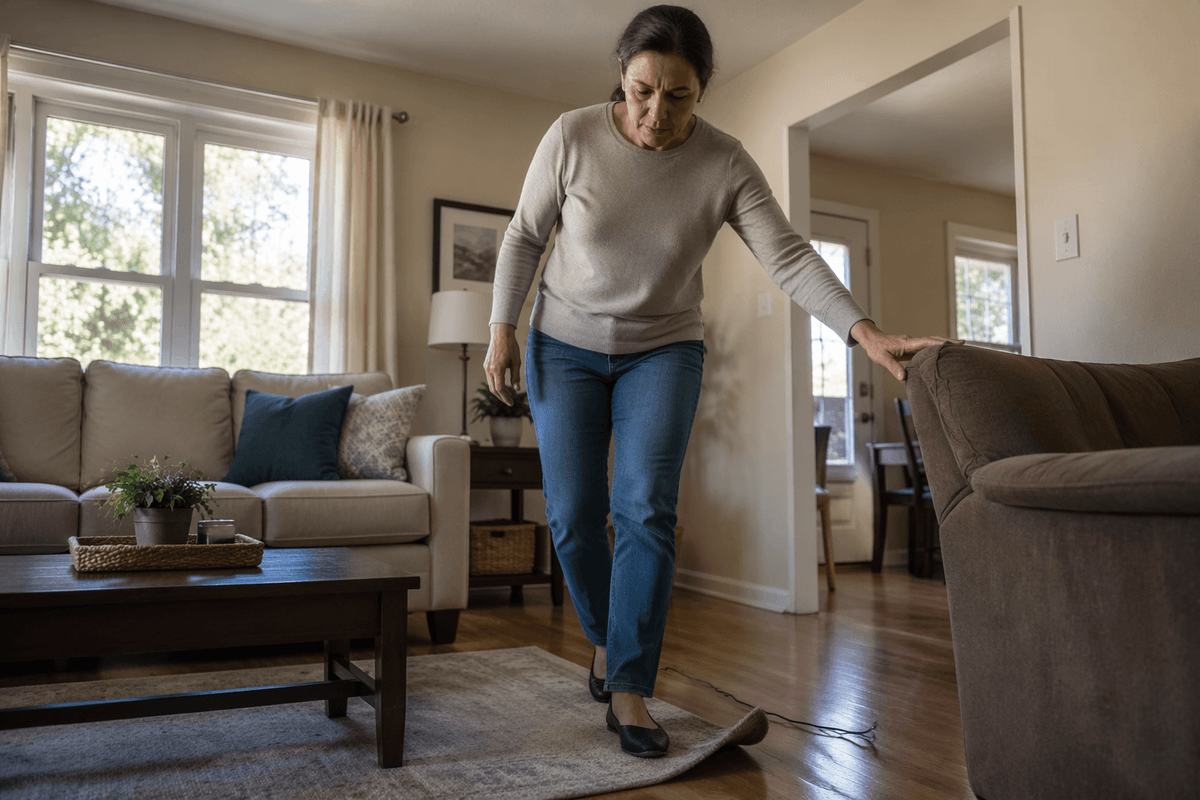
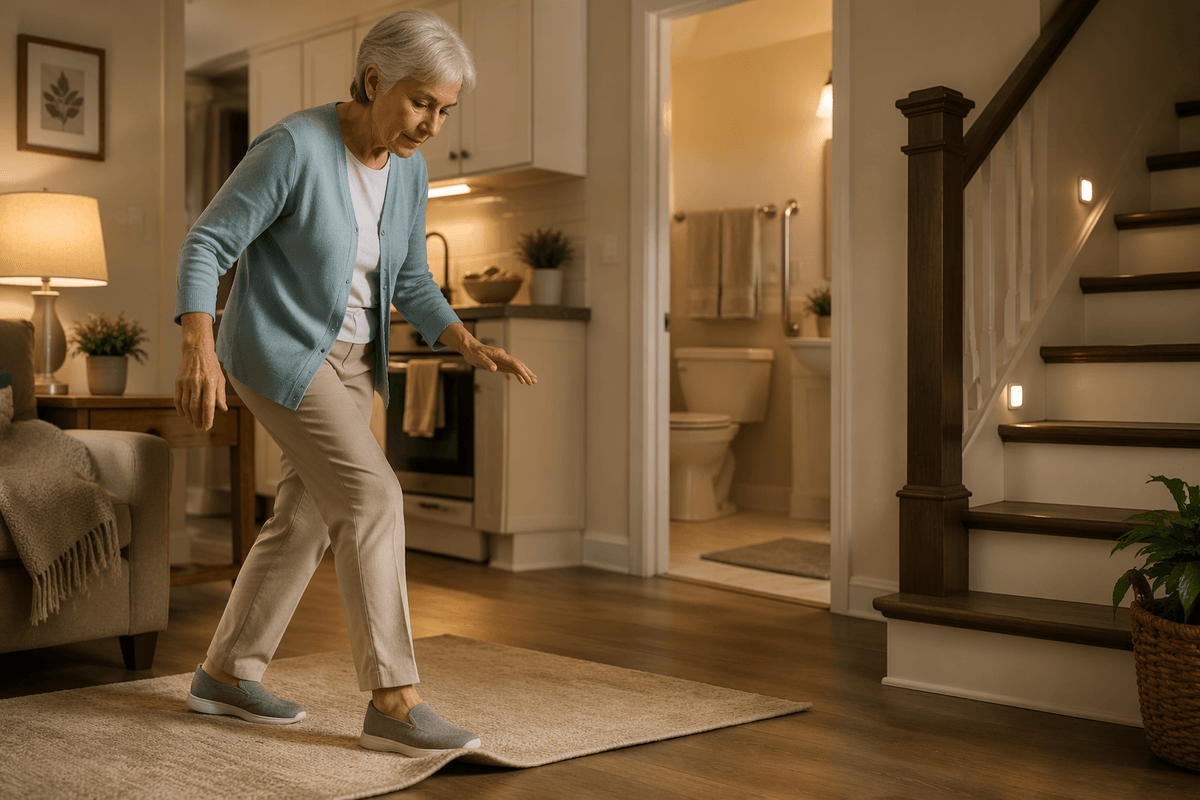
You may notice it first as a small change in pace: a tiny slowdown at the edge of the living-room rug, a wider step around the coffee table, or a hand that automatically reaches for the back of a chair when you pass. It’s easy to chalk that up to being careful, but those “micro-adjustments” often point to the same few trouble spots—places where your foot has clipped before, even if you didn’t fall.
Many near-misses repeat because rooms train the same movements. The bedroom-to-bathroom route asks for turning in a narrow space, stepping over a threshold, and walking when your eyes are still adjusting. The living room asks for weaving around furniture while looking up at the TV or down at something you’re carrying. When foot lift is a little lower or reaction time is a little slower, edges, cords, and low furniture don’t have to be dramatic hazards to become reliable trip triggers.
If it feels inconsistent, that can still be a pattern. A “safe” doorway in the afternoon may feel different at night when contrast is lower, your legs are tired, or you’re holding something that blocks your view. Over time, the home doesn’t change much—but the conditions around your steps do, and that’s often what makes one pass feel steady and the next one feel close.
Footwear and flooring trade-offs: comfort versus grip
It’s often the first step that feels off—the soft slipper that twists slightly as you turn, or the sock that slides a fraction on smooth flooring. Nothing looks dangerous, yet the foot doesn’t “stick” the way you expect, so the body does a quick catch-up. That catch-up can feel like a wobble in the hips, a grab for the counter, or a wider-than-usual step to regain control.
Comfort and grip don’t always come together. Cushioned soles can dull the feedback you use to judge where the floor is, especially on thick carpet or padded mats, while very flexible shoes may let the foot roll when you pivot. On the other hand, bare feet or smooth socks can move too easily on vinyl, tile, or polished wood. If the flooring changes from room to room, the same footwear can feel stable in one spot and oddly slippery in the next.
Rugs add their own trade-off: they’re gentle on joints, but edges can curl, bunch, or shift under a turning step. Even when a rug “looks flat,” it can drag at the toe just enough to turn a normal stride into a shuffle—especially on tired days, when your feet lift a little less without you noticing.
Lighting and contrast that reduce missteps and hesitations
It often shows up as a pause you can’t quite explain: you step into the hallway at night and your feet feel ready, but your eyes lag behind. A shadow near the baseboard can look like a raised edge. A dark rug on a dark floor can disappear until your toe finds it. That brief uncertainty is where hesitation creeps in—and hesitation can turn a normal step into an awkward, off-balance one.
In some homes the lighting is “bright enough” for sitting, but not for moving. Your brain uses contrast to judge distance and edges, especially on stairs and at thresholds. When contrast is low, the foot may land a little short or a little wide, and the body has to correct mid-step. Add glare from a lamp or a shiny floor, and the problem can flip: the surface looks washed out, so you slow down and reach for furniture that isn’t always where you expect.
That’s why the same route can feel different from one evening to the next. If you wake quickly, your pupils may still be adjusting, and tired legs may not lift as cleanly. The misstep isn’t always about “seeing poorly”—it’s often about seeing just well enough to move, but not well enough to move without second-guessing.
Bathroom movements that quietly amplify fall risk
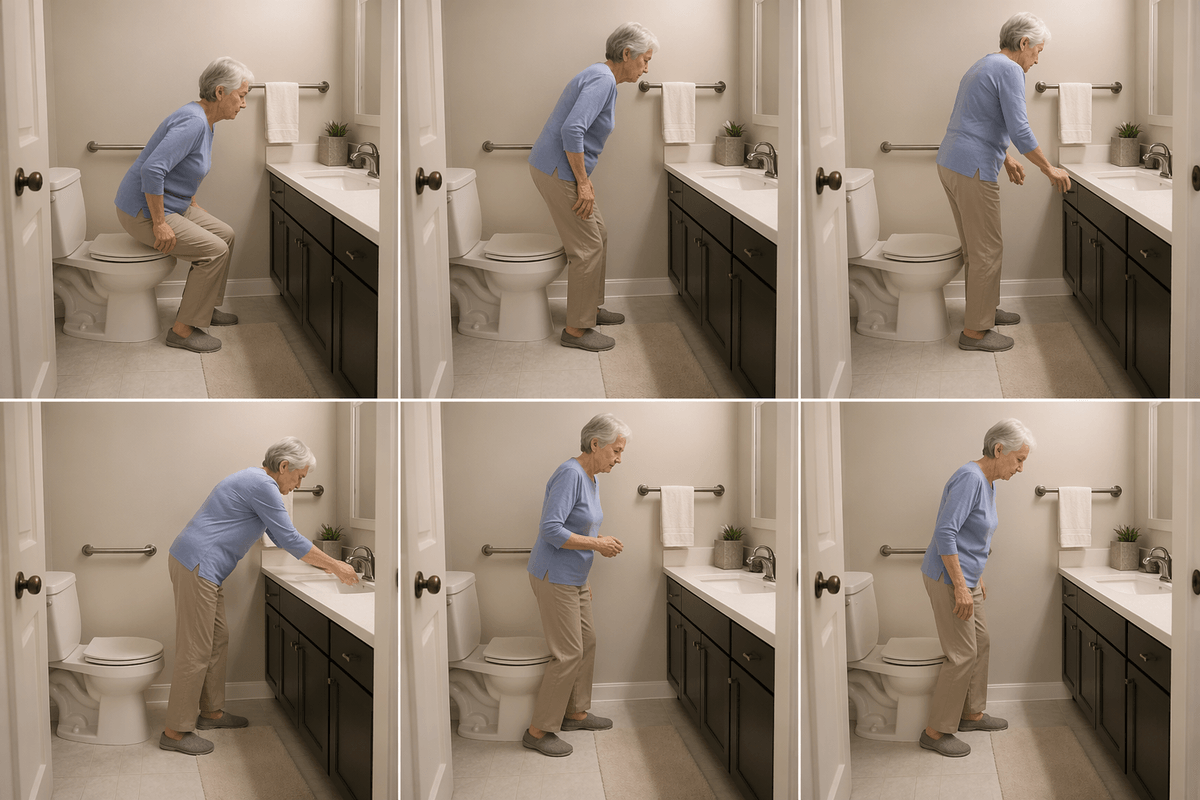
You might notice it when you stand at the toilet and everything feels slightly too close together—your knees brush the vanity, you turn to reach for toilet paper, and your feet have to shuffle to make room. In a small bathroom, those half-steps matter. If you’re moving in socks, or your heel lands on the edge of a bath mat that has crept a little, the floor can feel like it “moves” under you for a split second.
Bathrooms also ask for quick changes in body position that don’t always match how steady you feel that day. Getting up from a low seat, pivoting to the sink, leaning forward to wash, then stepping back again can pull your weight forward and then suddenly behind you. If you’re even a little lightheaded from getting up fast, or you’re stiff from sleep, your balance response may arrive a beat late—so you end up grabbing for the towel bar or counter without planning to.
Then there’s the quiet confusion of what counts as a “stable” handhold. A towel rack can look helpful but flex when you pull; a bath mat can feel soft but slide when it’s damp. When those supports aren’t as solid as they seem, the bathroom can turn an ordinary turn-and-step into a moment where your body realizes, mid-move, that it needs a different plan.
Kitchen and stair habits that create unexpected danger
It can be as simple as turning with a mug in one hand and a plate in the other, then realizing you can’t quite see where your feet are going. In the kitchen, counters feel like safety rails, so it’s easy to slide sideways, pivot quickly, or take a half-step backward without checking what’s behind you. A slightly tacky spot on the floor, a curled mat edge, or an open dishwasher door can turn that casual movement into a sudden “catch” that pulls your hips off line.
Stairs often feel safer than they are because the route is familiar. The tricky moments tend to come from habits: carrying laundry that blocks the railing hand, stepping down while looking toward a voice, or treating the last step like flat ground and relaxing too soon. If contrast is low, the foot may land a little short; if legs are tired, the knee may not lift as cleanly. The result isn’t always a fall—more often it’s that quick grab, or the uneasy thought that you’re starting to time your steps around the risk.
Health factors that make risk vary day to day
Some mornings the floor feels a little “farther away,” and you notice it most when you step over a threshold or start down the first stair. Other days, the same places feel normal. That swing can be frustrating, because it’s tempting to blame the house—until you realize the bigger variable is often the body you’re bringing into it that day.
Fatigue is an obvious one, but it’s not just being tired. When legs are a bit weaker or achier, the foot may not lift as cleanly and the step can shorten without you meaning to. If your vision is slightly blurrier, or your neck is stiff so you look down less, edges show up later. Even mild dehydration, a skipped meal, or standing up quickly can leave you a touch lightheaded, so your balance correction arrives a beat behind.
Medication changes and “stacked” symptoms can add to the inconsistency. A new pill that makes you drowsy, a cold that plugs your ears, or a bad night’s sleep can each be manageable alone—but together they can turn an ordinary pivot in the kitchen into a moment where you reach for the counter sooner than usual.
Building a realistic fall-prevention plan that sticks
It’s usually after a near-miss that the house suddenly looks different: the rug edge you’ve stepped over a thousand times, the dim stretch of hallway, the spot on the stairs where you tend to loosen your focus on the last step. In that moment, big “make the whole house safer” plans can feel overwhelming—especially when some days you walk through those same places with no problem at all.
A plan that tends to stick is smaller and more specific: not “be more careful,” but “this doorway at night,” “this turn in the bathroom,” “carrying this basket on the stairs.” When you name the repeatable situation, it becomes easier to see what’s actually driving it—low contrast, hands being busy, footwear that slides on one floor but not another, or legs that simply don’t lift as cleanly when you’re tired. The trigger isn’t always there every time, so it’s easy to forget until the next close call.
Many people find it helps to treat near-misses like data instead of a scolding. If the same route keeps producing hesitations, that’s your cue that the environment and the day’s body state are teaming up—and that’s the kind of pattern worth changing, even if you can’t predict which day it will show up.