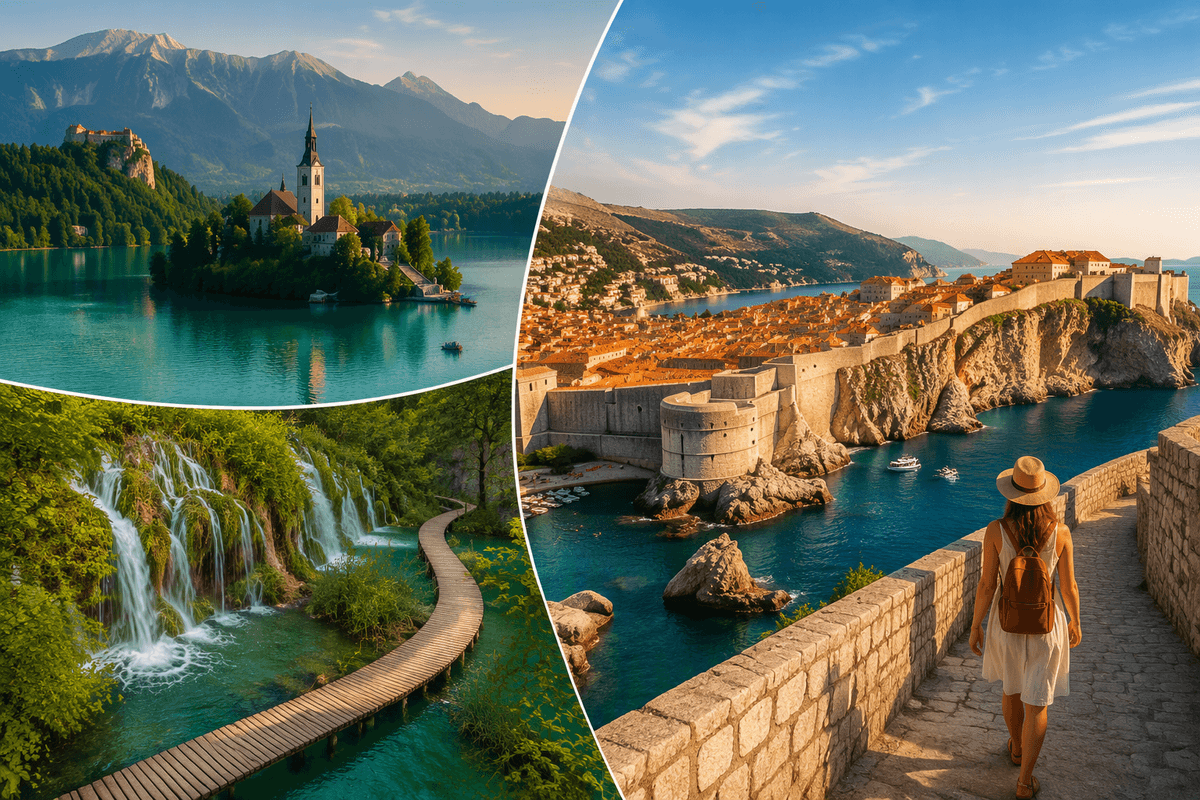
Tuscany’s wedding magic—what feels “dreamy” to you?
The first time you start pinning “dreamy Tuscany,” everything looks interchangeable—until you picture your guests actually arriving. A hilltop borgo feels like a movie, but the romance often comes with tight parking, steep cobbles, and a harder taxi situation after dinner. A villa in the countryside reads effortless in photos, yet it can mean longer airport transfers and fewer late-night options if you’re relying on one on-site bar and a DJ under noise rules.
Before you fall in love with a view, decide what “dreamy” means in motion: do you want a ceremony backdrop (rolling valleys, vineyards, frescoes, or sea) or a weekend rhythm (walkable dinners, easy shuttles, minimal vendor travel)? With 40–70 guests and a 6–9 month runway, clarity here saves you from paying for the wrong kind of magic—either in transport complexity or in venue premiums.
How to choose: vibe, views, logistics, guest comfort
I kept coming back to four buckets, because they force the right questions before you email anyone: (1) hilltop borgo/Val d’Orcia for pure “cinematic” vows, (2) Chianti vineyard estate for a contained, wine-forward weekend, (3) Florence palazzo/villa for art-and-architecture with the easiest arrivals, (4) Tuscan coast for a looser, sunset-and-aperitivo pace. The view is the hook; the guest experience is the filter.
Then run a quick reality check: Where do most guests land—Florence or Pisa—and how many transfers are you willing to pay for? If you’re needing shuttles for everything (hotel-to-venue, dinner, late-night), costs rise fast and timelines get rigid. Ask early about outdoor music cut-offs and where “the party” is legally allowed to move indoors; some venues photograph like freedom and operate like a curfew. Finally, map vendor access: remote beauty often means higher travel fees and fewer backup options on short notice.
Val d’Orcia hilltop borgo: cinematic countryside vows
The moment Val d’Orcia clicks is usually at golden hour: you’re standing on a rampart in a hilltop borgo and the whole valley looks staged—cypress lines, wheat fields, the kind of horizon that makes even a simple ceremony feel “designed.” It works especially well if your priority is a single, high-impact backdrop (think Pienza/Monticchiello side of the valley), but that same elevation can turn arrivals into a production.
For 40–70 guests, assume you’re managing transport more actively than you would at a countryside villa: coaches may need to drop people at the edge of the historic center, then it’s a walk over cobbles and steps—romantic for some, stressful for heels, luggage, and anyone with mobility limits. Parking is often scarce, and taxis can be thin after dinner, so if you want a late finish, you’ll likely be paying for shuttles on a strict timetable rather than letting guests drift back organically.
Also ask where the “real” reception can happen if wind kicks up or temperatures drop fast after sunset; in these towns, the prettiest terrace isn’t always the easiest place to amplify music or keep noise complaints at bay. The setting is unforgettable, but it rewards couples who like precision—tight schedules, clear meeting points, and a plan B that still feels special.
Chianti vineyard estate: wine-soaked, classic Tuscan glamour
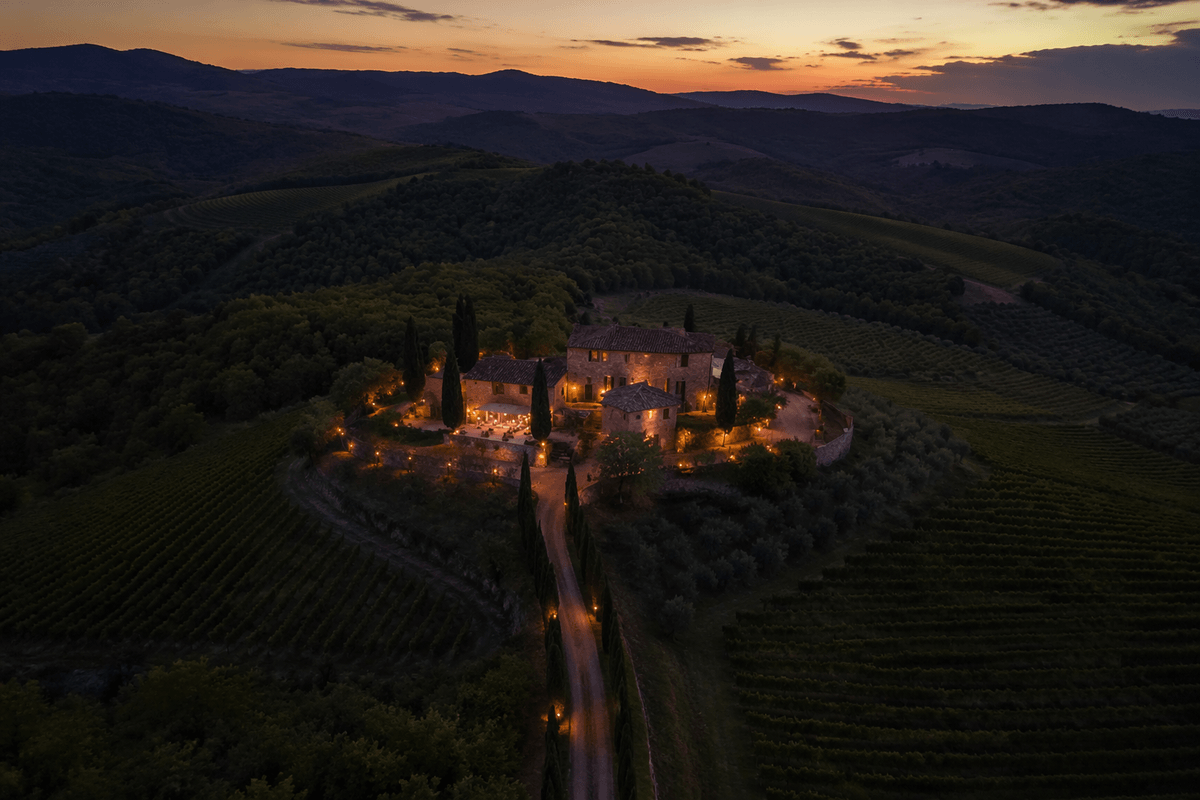
The first time a Chianti estate feels “right” is usually a practical moment: you realize the ceremony lawn, aperitivo terrace, and dinner space are all a three-minute walk apart—and suddenly your timeline stops depending on shuttles hitting narrow roads at exactly the right minute. This style suits couples who want the wedding to feel like a hosted weekend: wine tasting built in, a contained setting for 40–70 guests, and enough structure that even non-planners know where to be.
What doesn’t photograph as clearly is how “contained” can also feel limiting. Many vineyard estates sit far enough from towns that guests won’t casually wander to a second bar or late-night gelato, so you’re responsible for creating the full arc (and paying for it) on-site. Chianti is also popular for a reason—availability can tighten quickly at the 6–9 month mark, and some properties price weekends like a package once you factor in required catering lists, minimum nights, and extra staffing for anything past a set hour. If you want glamour without stress, prioritize estates with a true indoor party space—otherwise the noise rules will decide your ending for you.
Florence palazzo or villa: art, architecture, easy access
In Florence, the “dreamy” moment is often surprisingly unromantic: your guests step off a train or a short airport transfer and they’re already there—no winding country roads, no “where’s my shuttle?” group chat. A palazzo reception under painted ceilings (or a villa just outside the center) gives you instant atmosphere, plus the simplest vendor logistics in Tuscany: hair and makeup teams, musicians, florists, and backup rentals are all within reach if something changes last-minute.
But Florence convenience comes with two pressures you feel fast: cost and constraints. Spaces with real art-and-architecture character tend to price like city real estate, and your 40–70 guest count can push you into higher minimums or tighter room layouts than a countryside estate would. Noise rules and neighbors are also more present here, which can shorten outdoor music—even if the courtyard looks built for a midnight party. If your priority is a smooth arrival and a wedding that feels elevated without building an entire weekend on-site, Florence works; if you want sprawling late-night freedom, you’ll need to be picky about indoor party rooms and end times.
Tuscan coast hideaway: sea breeze, sunset aperitivo, relaxed
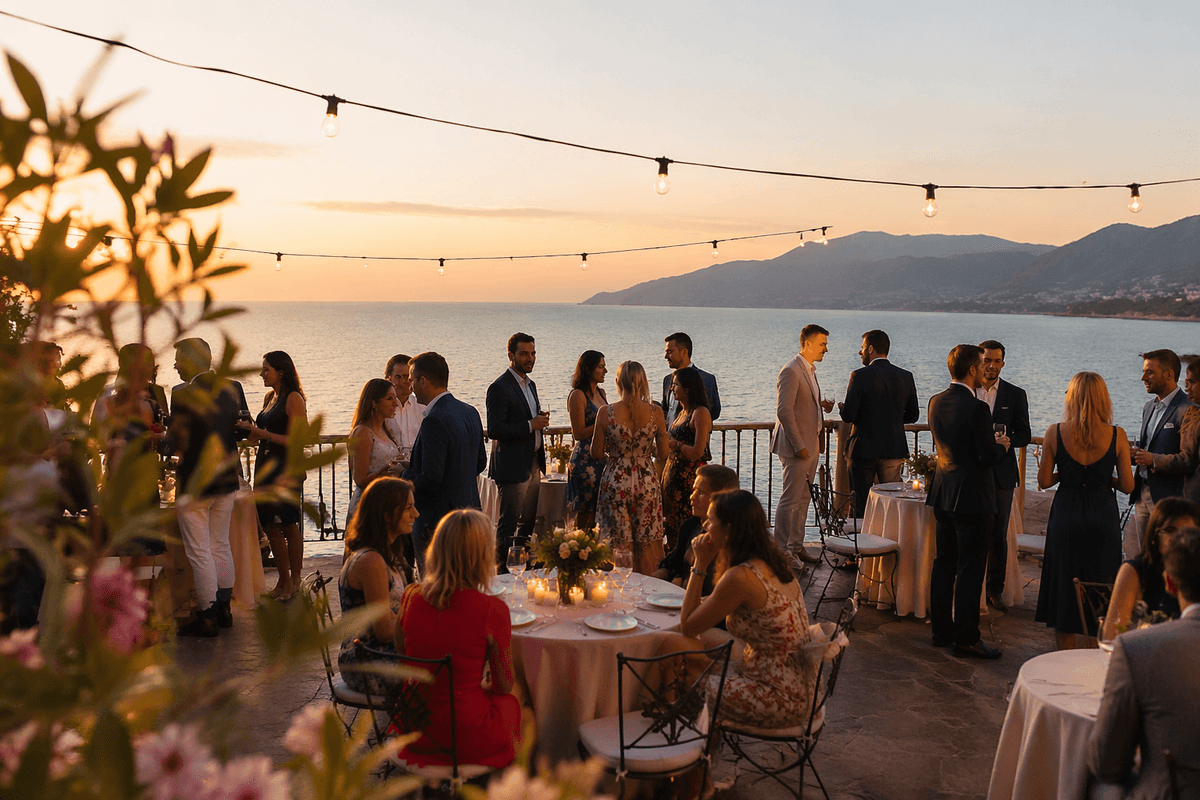
The coast usually wins you over in a small, sensory way: salt in the air, linen drying on balconies, and an aperitivo that feels like it belongs at 7:45 p.m. instead of “whenever the timeline allows.” It’s a strong choice if you want your wedding to read more relaxed than formal—think seaside villa, a boutique hotel near a beach town, or a clifftop terrace that naturally organizes the day around sunset. The catch is that “Tuscan coast” can mean very different logistics depending on where you land: closer to Pisa can feel straightforward, while farther stretches start to add transfer time and reduce vendor flexibility.
For 40–70 guests, the coast can simplify the weekend because people can entertain themselves between events—beach, promenades, casual seafood—without you paying to “program” every hour. At the same time, weather is less predictable than couples expect: wind can be a nuisance for ceremony audio and table styling, and evenings can cool fast even when the daytime is hot. You’ll want to ask venues how they handle breezy terraces (weights, wind screens, backup layouts) and where the party actually moves once outdoor music hits its limit—because on the coast, neighbors and seasonal crowds can be just as decisive as they are in a city.
Your final shortlist: match the place to your story
When you’re down to a shortlist, stop chasing “best” and match the setting to the story you want to host: Val d’Orcia borgo for cinematic vows (but higher shuttle control), Chianti estate for a contained wine-weekend (but you’re building the nightlife on-site), Florence for effortless arrivals and vendor depth (but tighter spaces and pricier minimums), and the coast for a looser sunset rhythm (but wind and seasonal crowds can steer the plan).
Before you inquire, pressure-test each option with the same three questions: where guests sleep, how they get home after dinner, and where the party legally moves if outdoors gets cut off. The right choice is the one you can run without constant micromanagement—especially on a 6–9 month clock.