Chasing auroras: expectations, timing, and uncertainty
The first hard decision usually isn’t where to go—it’s whether you can tolerate the odds. You can book the “right” latitude and still spend three straight nights staring at an overcast sky, or get a 12-minute blowout on the one night you almost stayed in. That uncertainty is the whole game, so your trip plan has to assume misses, not just hope for hits.
Think of aurora chasing as a three-variable puzzle: darkness (season and moon), geomagnetic activity (unbookable), and clouds (region-specific). You only control the first and partially control the third by choosing a place with short travel times, multiple viewing options, and easy last-minute repositioning. The best destination for a 5–10 day winter trip is rarely the “most famous”—it’s the one where you can try often, move cheaply, and still have a good day plan when the forecast fails.
How to maximize your odds anywhere
The first planning hesitation is usually how “mobile” you want to be. A single hotel in one town is simpler (and often cheaper), but it quietly bets your whole trip on one cloud pattern. If you can tolerate a little logistical mess—renting a car, booking a couple of cancellable nights, or choosing a hub with multiple road directions—you’re buying more attempts, not just prettier scenery.
Maximizing odds is mostly about stacking nights and reducing friction. Prioritize places where you can get out of light pollution fast, where a late dinner doesn’t kill your chance to be outside by 10–11 p.m., and where you can safely wait out a lull in a heated car or café. Tours help when you don’t want to drive, but they also lock you into departure times and group pace—great for first-timers, limiting when conditions shift quickly.
Build a simple rhythm: daytime plans that stay flexible (museums, hot springs, short hikes), then a nightly “go/no-go” check based on cloud cover and aurora forecast. The practical takeaway is boring but effective: more nights outside, fewer long transfers, and at least one backup direction on the map for clearer skies.
Northern Hemisphere classics: reliable, accessible hotspots
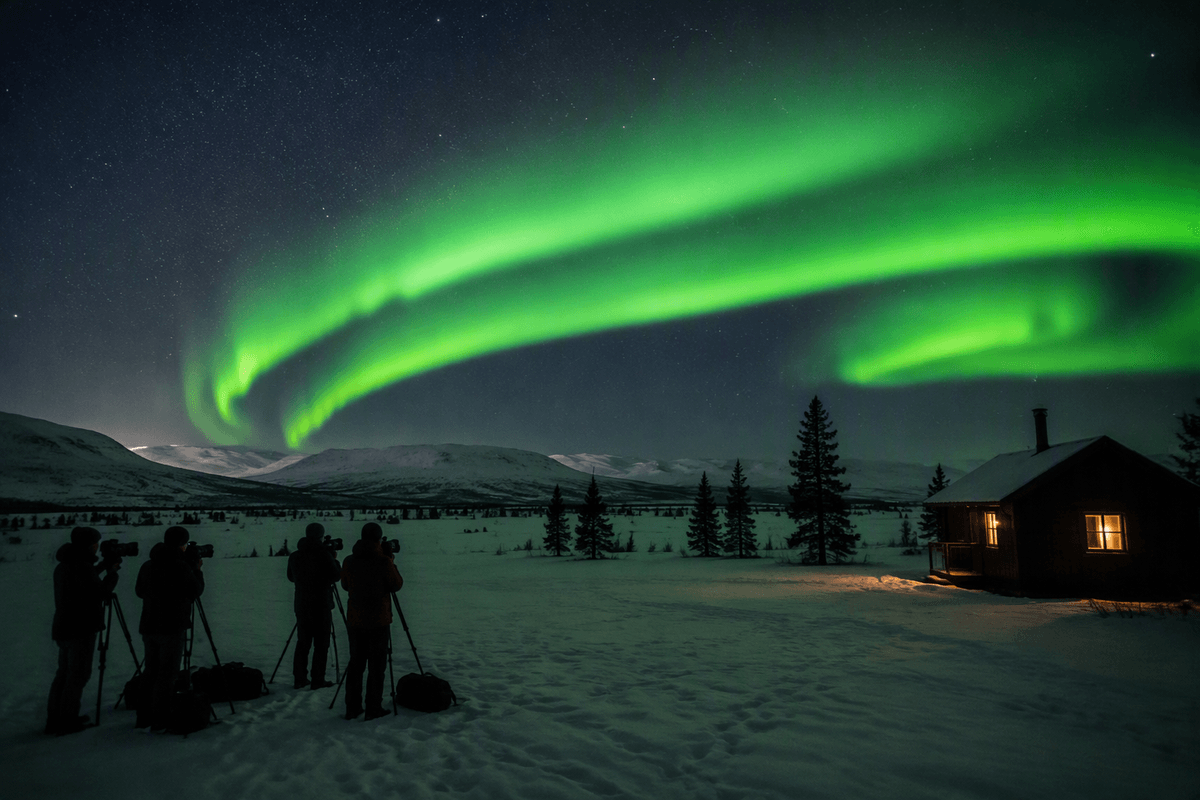
The first time you try to shortlist the “classic” North, you realize they’re classic for different reasons: some are easy to reach, some are statistically clearer, and some just have the best support system for getting you outside night after night. For a 5–10 day trip with limited vacation days, I’d start by asking one blunt question: do you want a plug-and-play hub with tours, or a clearer-sky region where you’ll likely need to drive and self-manage more?
If you want maximum convenience, Northern Norway (Tromsø area) and Iceland win on flight access, lodging variety, and lots of operators—meaning you can land, sleep, and be on a chase with minimal planning. The downside is friction you feel in real time: pricier meals and rentals, more competition for “good” tours, and coastal weather that can erase a promising forecast with cloud and wind. It’s reliable in infrastructure, not always in sky clarity.
If you’re optimizing for clearer nights, inland options like Swedish Lapland (Abisko/Kiruna) and Finnish Lapland tend to feel more “repeatable,” with less chaotic weather and shorter drives to darkness—at the cost of extra connections and fewer last-minute alternatives. North America’s classics—Fairbanks and Yellowknife—can be excellent for dry cold and big-sky viewing, but they demand winter driving confidence and a budget buffer for flights and car logistics.
Off-the-radar North: fewer crowds, bigger trade-offs
The first time you look beyond the headline hubs, the trade-off gets real: you’re swapping “someone else will handle it” for quieter roads and a better shot at being alone under the lights. That can be exactly what you want—until you realize your backup plan is also you. Off-the-radar northern spots tend to reward people who can make last-minute decisions without burning half the trip on transfers.
In the Nordics, smaller inland towns (especially away from the coast) can feel calmer and more consistent for clouds, but tour options thin out fast and restaurants keep shorter hours—meaning a missed grocery run at 6 p.m. can become your biggest logistical problem. In Alaska and northern Canada, the less-visited bases often come with stunning darkness and minimal light pollution, but they also raise the stakes on winter driving, limited cell service, and fewer “salvage” activities when the sky is dead. If your vacation days are tight, the practical filter is simple: go off-the-radar only if you can still get multiple viewing nights without long reposition days—and if you’re comfortable being your own dispatcher when plans change.
Southern Hemisphere auroras: rare, wild, worth it
The Southern Hemisphere temptation usually shows up as a late-night tab you keep reopening: New Zealand, Tasmania, Patagonia—less hype, different constellations, and the idea of “escaping the crowds.” Aurora Australis season is centered on Southern winter (roughly June–August), so if your vacation window is a typical U.S. winter trip in December–February, you’re not “going south for better odds”—you’re going south for the wrong season.
If you can travel June–August, the trade-off flips. Places like Tasmania (around Hobart/Bruny Island) and New Zealand’s far south (Invercargill/The Catlins, sometimes Stewart Island) can deliver unforgettable nights, but they’re often cloudier and less tour-saturated than Nordic hubs—meaning you may spend more time self-driving, watching marine forecasts, and making last-minute calls. Patagonia can be spectacularly dark, but distances are big and wind can turn a “quick chase” into a tiring, slow night.
Worth it when you want the wilder version and can build in extra buffer: more nights, fewer fixed reservations, and at least one “day plan” that doesn’t depend on calm weather.
Choosing your base: cities, lodges, road trips
The first real fork in the road is whether you want to sleep in a city and commute to darkness, or sleep in the darkness and commute to… everything else. Big hubs (Tromsø, Reykjavík, Fairbanks) make arrivals painless and give you tour depth—useful when you’re jet-lagged and don’t want to interpret road conditions at 11 p.m. You can “waste” your best geomagnetic hour loading a van, or watching coastal cloud sit over town while clearer skies are 90 minutes away.
A lodge-style base outside the lights can be almost unfairly efficient: you eat, step outside, and try again tomorrow with zero transfer tax. But you’re also locking yourself into one microclimate; if the clouds park over that valley, you’ll feel the trap by night two. I like lodges most when they’re still within an easy drive of at least two different weather directions.
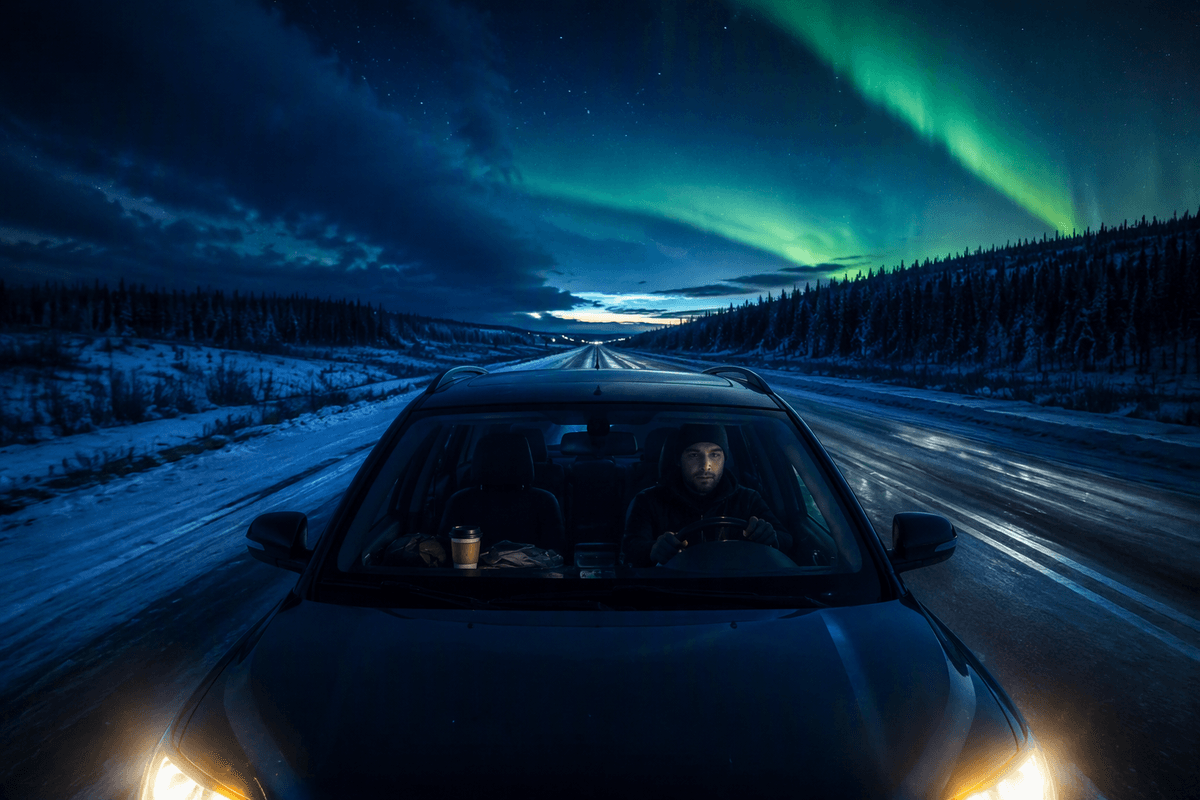
Road-tripping buys the most cloud dodging, but it costs energy. If you only have 5–7 nights, keep it to one “move day” max, book cancellable stays, and choose routes with simple winter driving—because the fastest way to miss an aurora is to be exhausted and stuck on an icy two-lane at the wrong time.
Wrap-up: pick your region, plan flexibly, stay patient
The last-night mistake is thinking the plan failed because the lights didn’t show. More often, the plan failed because it left you with no good move when the forecast turned—no extra night, no alternate direction, no way to shift plans without burning a day.
So pick your region the same way you’d pick a winter base for anything weather-dependent: prioritize flight simplicity, enough darkness in-season, and a place where you can try repeatedly without heroic logistics. If you’re traveling December–March, the Northern Hemisphere classics (Nordics, Alaska, northern Canada) usually give you the cleanest “odds per vacation day.” If your window is June–August, the South can be worth the long haul—but only if you can tolerate cloud risk and self-drive flexibility.
Then plan like you expect two “miss” nights: book one flexible activity per day, keep nights open, and treat patience as part of the budget. When it finally pops, it rarely cares that you had an early tour booked.