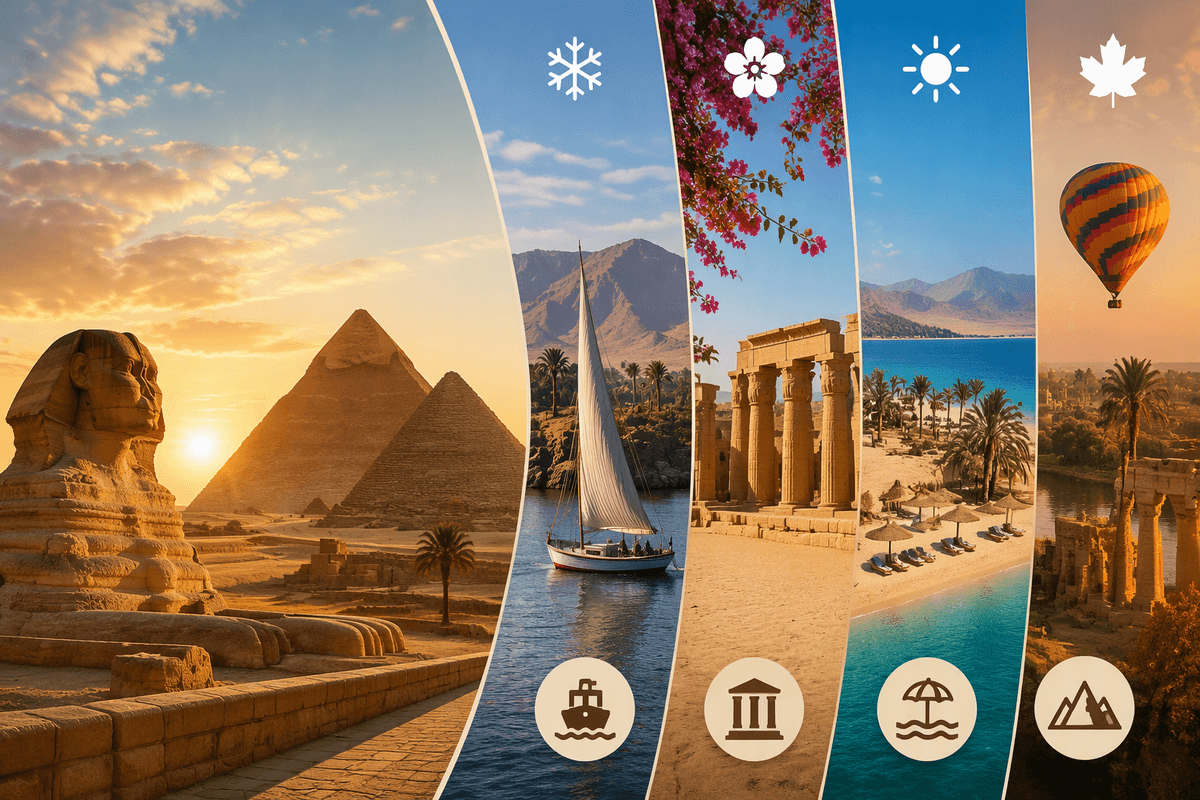
Choosing Egypt’s timing: weather, crowds, costs
The first real decision I had to make wasn’t Cairo vs. Luxor—it was whether I wanted to pay for comfort or “earn” it with strategy. Egypt rewards early starts and punishes midday wandering, so your dates quietly determine how many usable sightseeing hours you’ll actually have (especially on a 7–12 day clock with limited PTO).
As a rule, cooler months make temples and city walks feel effortless, but they also pull in more visitors and push up prices—meaning you may trade heat stress for logistics stress (sold-out Nile cruise cabins, higher hotel rates, and less flexibility if you want to shuffle days). Warmer months flip the equation: better deals and thinner crowds, but you’ll need a heat plan—shorter midday blocks, more air-conditioned breaks, and realistic expectations about how many “big sites” you can stack in one day. Layer in calendar quirks—Ramadan hours, holiday closures, and flight pricing spikes—and “best time” becomes less about the weather chart and more about what kind of friction you’d rather manage.
Winter (Dec–Feb): peak comfort, peak crowds
The first winter morning I tried to “beat the crowds” at Giza, I still ended up in a slow-moving line of buses and tour groups—just with a better temperature and a nicer mood. That’s December through February in Egypt: the most forgiving conditions for long temple walks, museum laps, and Cairo street time, but with the highest odds you’ll feel your itinerary tightening around other people’s itineraries.
Comfort is the win here. You can stay outside longer, stack more sightseeing into a day, and recover faster for early starts in Luxor and Aswan. The flights and hotels tend to run hotter, and Nile cruise cabins (especially the popular 3–4 night routes) can sell out or leave you choosing between your ideal dates and your ideal boat.
Two winter frictions to plan around: holiday spikes (late December into early January) and the “perfect weather” temptation to overbook days. Winter makes it easier to do more, but crowds and transit time can quietly eat the hours you thought you gained.
Spring (Mar–May): sweet spots and khamsin winds
In March, I stopped needing a full “heat plan” and started thinking in half-measures: a 7:30 a.m. start still mattered, but I didn’t feel punished if breakfast ran long or the museum took an extra hour. That’s the appeal of spring—especially March into early April—when Cairo, Luxor, and Aswan are generally manageable for first-timers who want big days without the winter-level crush.
Spring can’t decide if it’s calm or chaotic. Khamsin winds (often March to May) can roll in hot, dry, and dusty, turning a pyramid day into squinting photos and gritty contact lenses. It’s not a dealbreaker, but it can force an itinerary pivot: swap an exposed site for an indoor block (Egyptian Museum / GEM if your tickets are set), or move your “must-be-clear” views earlier in the trip instead of leaving them for the end.
Cost-wise, spring often lands between winter premiums and summer bargains. You’ll still want to lock Nile cruise dates in advance, but you’re less likely to be boxed into only expensive cabins—if you stay flexible by a day or two and don’t plan every afternoon outdoors.
Summer (Jun–Aug): heat strategy and best-value deals
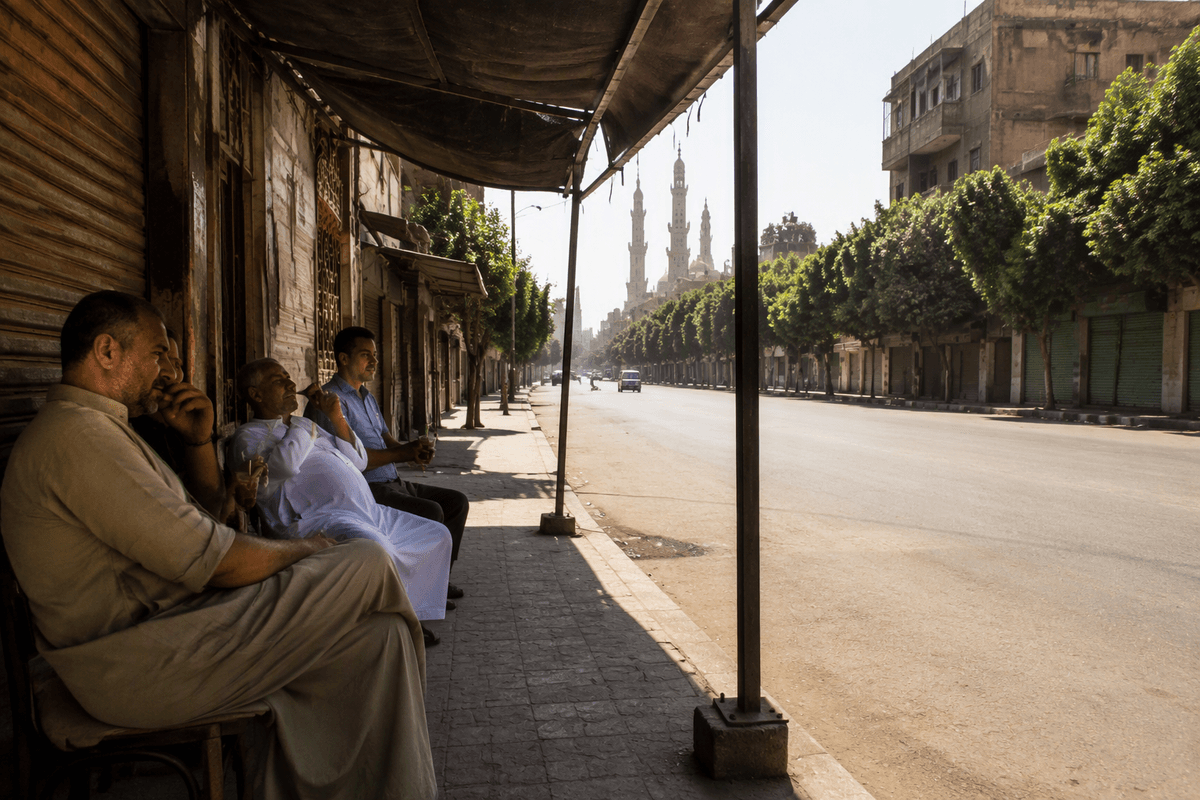
By June, the schedule stops being “nice to have” and becomes the trip. In Cairo it’s workable if you treat late morning like a hard stop, but Upper Egypt (Luxor/Aswan) is where summer makes itself felt: the same temple loop that was pleasant in March becomes a stamina test by 10:30 a.m., and the heat can turn “one more site” into a low-grade headache that wrecks your evening.
The upside is real: June through August is often where flights and hotels loosen up, and you’ll feel it at the big icons—less shoulder-to-shoulder pressure at Giza, fewer choke points inside popular tombs. Plan two outdoor blocks max (sunrise + late afternoon), put museums and long lunches in the middle, and pre-book cars with reliable A/C instead of trying to “save” with random taxis that may or may not show up when it’s 104°F.
If you want summer to feel like a deal instead of a dare, bias the itinerary toward the Red Sea (Hurghada/El Gouna/Sharm) for recovery days and treat Luxor as a precise, early-start sprint—not a leisurely wander.
Autumn (Sep–Nov): shoulder-season balance for sightseeing
The first time autumn felt “easy” was in late September, when I realized I could finish a Luxor morning, take a real lunch break, and still have energy for an evening walk—without the winter sense that every ticket line was a competitive sport. September can still carry summer’s edge (especially inland), but the heat stops dominating your entire decision tree, which matters when you’re trying to fit Cairo + Luxor + Aswan into one PTO-limited loop.
October into November is the shoulder-season sweet spot for first-timers: better sightseeing hours, fewer mid-afternoon meltdowns, and usually more sane pricing than December. The crowds start waking back up—especially around school breaks and popular cruise weeks—so you can’t treat it as “low season.” If a Nile cruise is non-negotiable, lock dates earlier than you think, then use the flexibility you saved on hotels to absorb small frictions (a delayed train, a slower museum day) without sacrificing your core sites.
Match season to trips: Nile cruise, beaches, deserts
I started thinking less in months and more in “what kind of Egypt day am I buying?” A Nile cruise wants daylight comfort because you’re constantly stepping on and off the boat for exposed temple stops. Winter is the easiest physically, but it’s also when cabins disappear first—so if your cruise dates are fixed, you may end up building Cairo and flights around the boat, not the other way around. Spring and October–November are the calmer compromise: still pleasant on deck, usually less pricing shock, and you’re less likely to lose an afternoon to heat recovery.
For Red Sea time (Hurghada/El Gouna/Sharm), summer becomes oddly practical: the water and sea breeze do more work than they do inland, and beach days absorb heat better than temple marathons. Mixing “beach + Luxor” in July can feel like two different trips—one restorative, one punishing—unless you keep Luxor to early starts and short site lists.
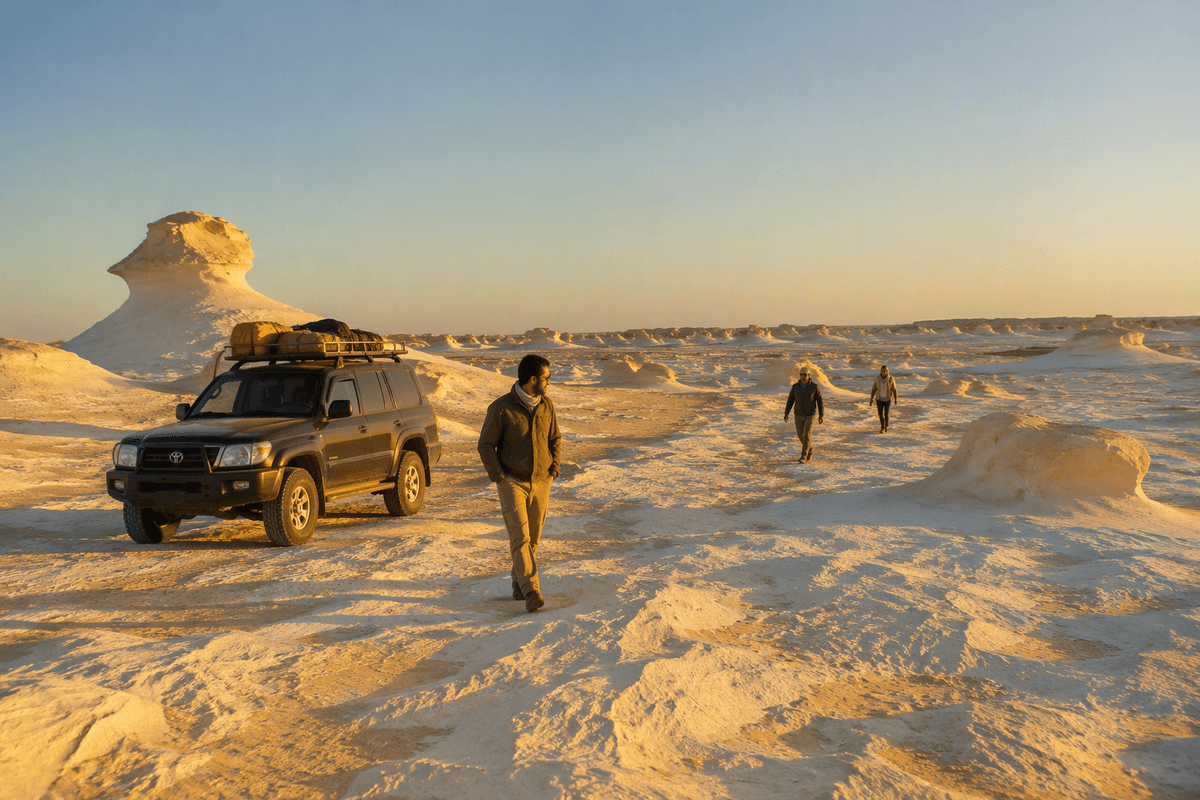
Desert add-ons (Siwa, White Desert, long Sahara-style drives) are where I’d be strict: prioritize October through April for sleepable nights and tolerable midday exposure. In peak summer, it’s not just uncomfortable—it can compress your safe outdoor window so much that the tour turns into a lot of driving for very little time outside.
Final checklist: booking windows and comfort priorities
The last planning friction is always the same: you can’t optimize for comfort, price, and flexibility at once, so pick your “non-negotiable” early. If a Nile cruise is the anchor, book it first—good boats on the popular 3–4 night routes don’t politely wait for you to finalize Cairo hotels. If flights are your constraint (fixed PTO, limited gateways), lock airfare next, then keep hotels more flexible so you can absorb a slower day without paying change fees everywhere.
Then sanity-check your comfort priorities against your daily pace: in summer and early September, assume two outdoor blocks (early + late) and treat midday as indoor/A/C time; in winter, assume crowds will add invisible hours (lines, traffic, group bottlenecks) even when the temperature feels perfect. Finally, look at your calendar for disruption magnets—late December/early January peaks, and Ramadan-style reduced hours—so your “must-do” sites aren’t scheduled for the one afternoon everything closes early.