Why the Faroes feel remote—what to expect
I realized the Faroes aren’t “remote” in the romantic sense when I tried to plan a simple Plan B: if the hike is socked in by fog, where do you go instead—without burning half the day driving? The islands look small on a map, but the experience is big-weather, narrow-road, limited-options travel, where a minor change in wind can reshape your whole afternoon.
What makes them feel far is less the distance and more the friction: sparse dining outside Tórshavn, short opening hours, and long gaps between services. A rental car buys you flexibility, but it also comes with single-lane tunnels, sheep-on-road moments, and parking pinch points at popular trailheads. Rely on buses and you’ll save money and stress, but you’ll often trade spontaneity for a schedule that doesn’t match “chasing light.”
The key expectation: plans need slack. Build your week around a few “must-do” windows, and keep one or two weather-agnostic days (villages, museums, easy coastal walks) so cancellations don’t feel like failure—just rerouting.
When to go: weather, crowds, daylight
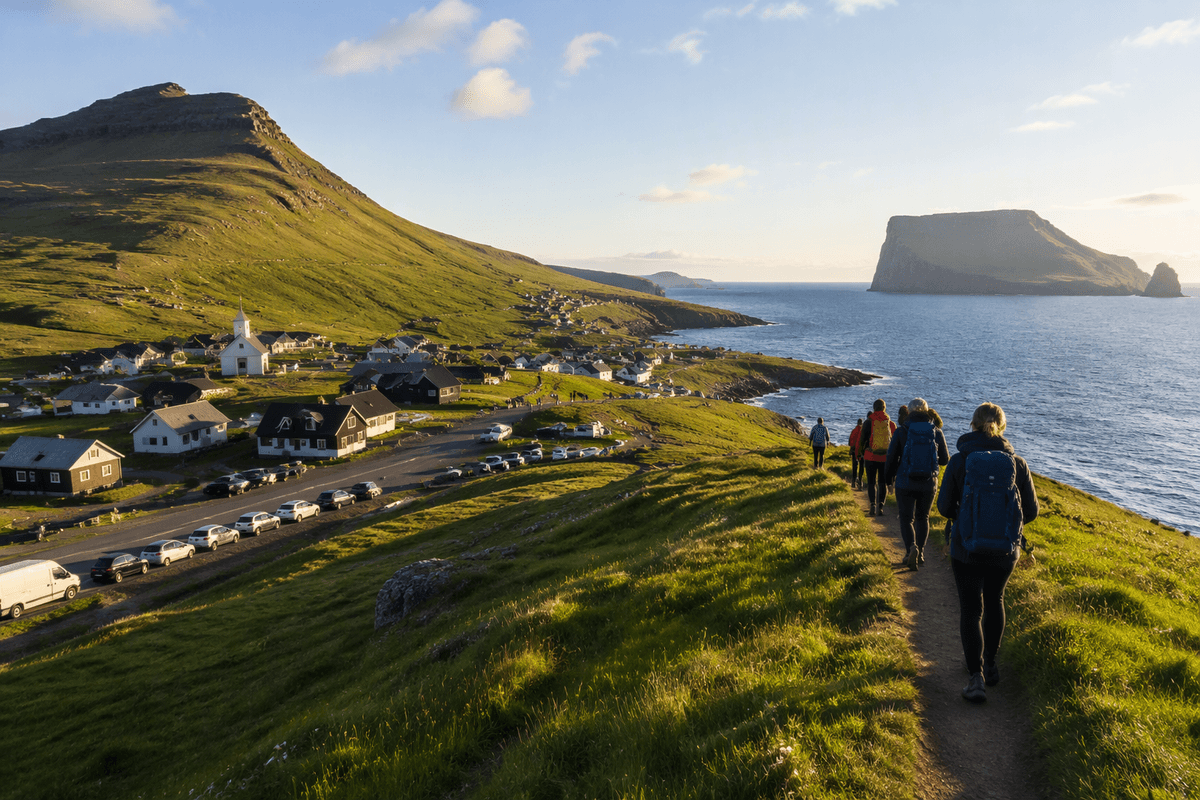
I hesitated over dates more than flights, because in the Faroes “bad weather” isn’t rain—it’s wind and low cloud that can turn a ridge into a no-go and make a ferry day feel like a gamble. For a first trip, late spring (May–early June) and early autumn (late August–September) tend to behave best: you get long-ish daylight without peak-summer pressure, and you’re less likely to feel like every layby and café is already spoken for. The catch is that “better” still means fast-changing visibility, so you’re planning around odds, not guarantees.
High summer (July–early August) buys you the longest days and the best chance to stack hikes, but it also concentrates crowds and availability—especially for sought-after stays and anything with a fixed capacity. If you’re on a mid-range budget, that’s when prices and choice can pinch hardest, and you’ll feel it most outside Tórshavn where options are fewer.
Shoulder-season strategy: choose a week with maximum daylight you can afford, then build in one deliberate buffer day. Use it for villages, short waterfall walks, museums, or a slow Tórshavn evening—things that still work when the cliffs disappear into fog and your “big hike” needs to slide by 24 hours.
Getting there and getting around responsibly
I booked my flights before I committed to a daily route, mostly because it’s the one part that doesn’t care about fog. If you’re coming from the UK/Europe, the simplest pattern is fly into Vágar, then decide whether you’re immediately driving into a base (often Tórshavn) or keeping the first night near the airport to avoid a late arrival plus a tired first tunnel crossing. That choice matters more than it sounds: fatigue plus wind can make “just one more drive” feel like work, not freedom.
For getting around, a rental car is the most resilient option for a 5–7 day first trip, because it lets you swap hikes and viewpoints on short notice when cloud sits on the ridges. The limitation is cost (and you’ll feel it when you’re paying for a car that’s parked during a stormy afternoon), plus you need to be comfortable with narrow roads and sudden gusts—especially on exposed stretches. Buses work if you’re anchoring yourself in Tórshavn and accepting fewer micro-stops, but the schedule can force you into long waits that become painful when the weather window is only two hours.
Responsibly, I’d pre-book stays early (choices are finite), then keep day activities flexible: don’t lock every morning into a fixed tour unless it’s your one must-do. If ferries or boats wobble, your backup is land-based: short village hops, low-level walks, and museums—things you can reach without committing to a crossing that might not cooperate.
Where to base yourself by region
On my first draft itinerary, I kept moving bases every other night to “cover more,” then realized I’d be unpacking in the same weather windows I needed for hikes. For 5–7 days, two bases is the sweet spot: it keeps driving manageable without betting your whole week on a single ferry day, and it gives you enough flexibility to chase clearer skies across islands.
If you want the most robust all-weather plan, base in Tórshavn (Streymoy) for 4–5 nights and treat it as your hub: it’s the best place for groceries and dinner options, and you can pivot plans when wind shuts down higher routes. The compromise is that “quick” day trips (to Vágar viewpoints, Eysturoy villages, or Norðoyar) can stack up as long driving days, especially if you’re detouring for visibility.
For a second base, Klaksvík works well if your priorities lean toward the north (Kunoy/Kalsoy area and bigger mountain days). It’s quieter and feels closer to the dramatic ridgelines, but you’ll have fewer evening choices and you’ll notice it if a crossing gets delayed and you’re counting on one restaurant. Vágar is tempting for the airport convenience, yet as a main base it can feel oddly limiting: you save time on arrival/departure, but you spend more of the week commuting to the “middle” of the islands where plans are easiest to reshuffle.
Top experiences without overplanning
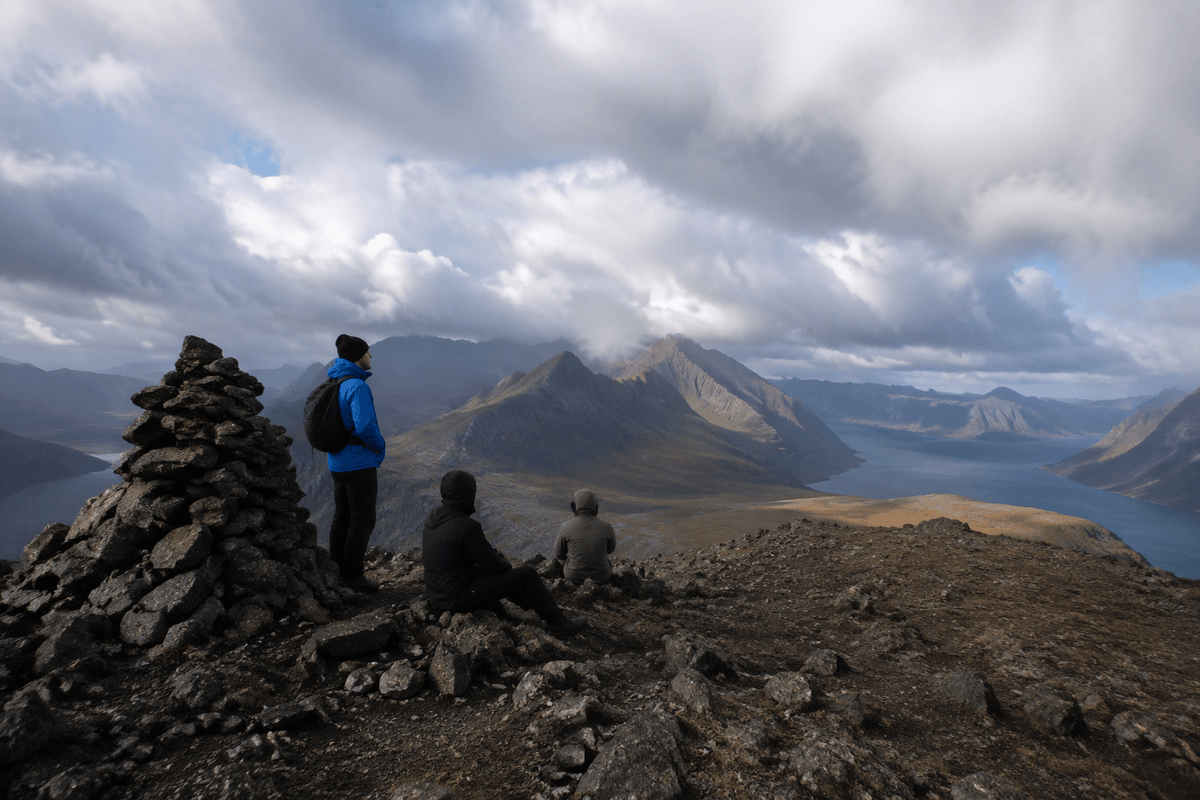
The morning I finally had clear visibility, I stopped trying to “do the Faroes” and started choosing one high-commitment experience per day, max. A classic example is the Mykines day: it’s unforgettable when seas are reasonable and the birds are active, but it’s also the easiest plan to collapse if sailings change or the wind rises. If Mykines is your one non-negotiable, put it early enough in the week that you can slide it by 24–48 hours, and don’t stack a long drive or another fixed booking on top of it.
For land days, I’d rotate between a ridge hike and a “low-stakes” village circuit so weather doesn’t bully your whole itinerary. The Saksun–Tjørnuvík side of Streymoy works well for this: you can commit to a hike if the cloud lifts, or you can still get a full day of drama from beaches, valley views, and short walks when the tops are socked in. Gásadalur and the Múlafossur waterfall is similar—quick to reach, great in moody weather, but it can feel crowded when a tour bus lands at the same time.
If you’re picking one “big” hike to plan around, Slættaratindur (Eysturoy) is a strong bet because you can often make a late call: if the summit is clear, go; if it isn’t, you haven’t burned a ferry ticket. Meanwhile, keep a flexible list of shorter backups—Kirkjubøur for history, a slow Tórshavn evening for food, or an extra village stop when the wind makes ridgelines a poor decision.
Budget, packing, and safety essentials
I felt the budget pinch most on the days when the weather forced me indoors: you’re suddenly buying extra coffees, a second bowl of soup, and paying to park somewhere you didn’t plan to linger. If you’re mid-range, assume accommodation will be your anchor cost and treat restaurants as a “sometimes” rather than a default—outside Tórshavn, dining hours can be narrow, and arriving after a long hike can mean the kitchen is already done. What worked better was mixing one proper dinner every couple of nights with supermarket lunches and car snacks; it’s not romantic, but it keeps you from making stressed decisions when a ferry gets pushed back.
Packing is less about warmth and more about staying functional in wind: a truly windproof outer layer matters more than an extra fleece, and waterproof trousers earn their place because sideways rain shows up fast. Footwear is the other non-negotiable—mud and wet rock turn “short” walks into slow work, and that’s how you miss your weather window. I also carried a small daypack cover and dry bags; phones die early when they’re cold and wet, and navigation is harder when the ridge disappears.
Safety-wise, I treated exposed hikes like a negotiation with the forecast, not my fitness. If gusts are up or cloud is glued to the tops, swapping to a low-level village day is a smarter flex than “pushing through,” especially if you’re solo or you’ve got a timed crossing later. The islands reward ambition, but they punish stubbornness.
Leaving with memories, not regrets
On my last morning, I almost squeezed in “one more viewpoint,” then caught myself doing the thing the Faroes quietly trains you out of: betting the day on conditions you don’t control. If your flight is later, it’s tempting to drive far and hope tunnels and weather behave, but this is where small delays compound—an extra photo stop turns into a wet change of clothes, then you’re rushing, and suddenly the islands feel stressful instead of spacious.
What left me happiest wasn’t ticking the final hike; it was leaving slack on purpose. I kept a short, low-risk loop near my base (coffee, a village wander, one last shoreline walk) and used the remaining time to solve practical loose ends: refuel early, return gear while I still had daylight, and buy a couple of easy snacks so “airport hunger” didn’t become an overpriced mistake. The best souvenir here is a plan that didn’t break—because you built it to bend.